Disclosure: This post contains affiliate links. As an Amazon Associate, we earn from qualifying purchases at no extra cost to you.
Most mice on the market are designed around average or larger hand sizes, which leaves anyone with smaller hands stretching their fingers, resting their palm awkwardly on the back edge, or gripping too tightly just to hit the buttons comfortably. Over a full workday, that adds up to real fatigue in the thumb and wrist. The fix isn’t just “buy a smaller mouse”, shape and grip width matter as much as overall length. Here are the mice that actually fit smaller hands well.
Quick Picks
- Best Overall: Logitech M720 Triathlon
- Best Ultra-Compact: Razer Pro Click Mini
- Best Vertical Design: Contour UniMouse Small
- Best Budget Pick: Anker Vertical Ergonomic Mouse
1. Logitech M720 Triathlon — Best Overall

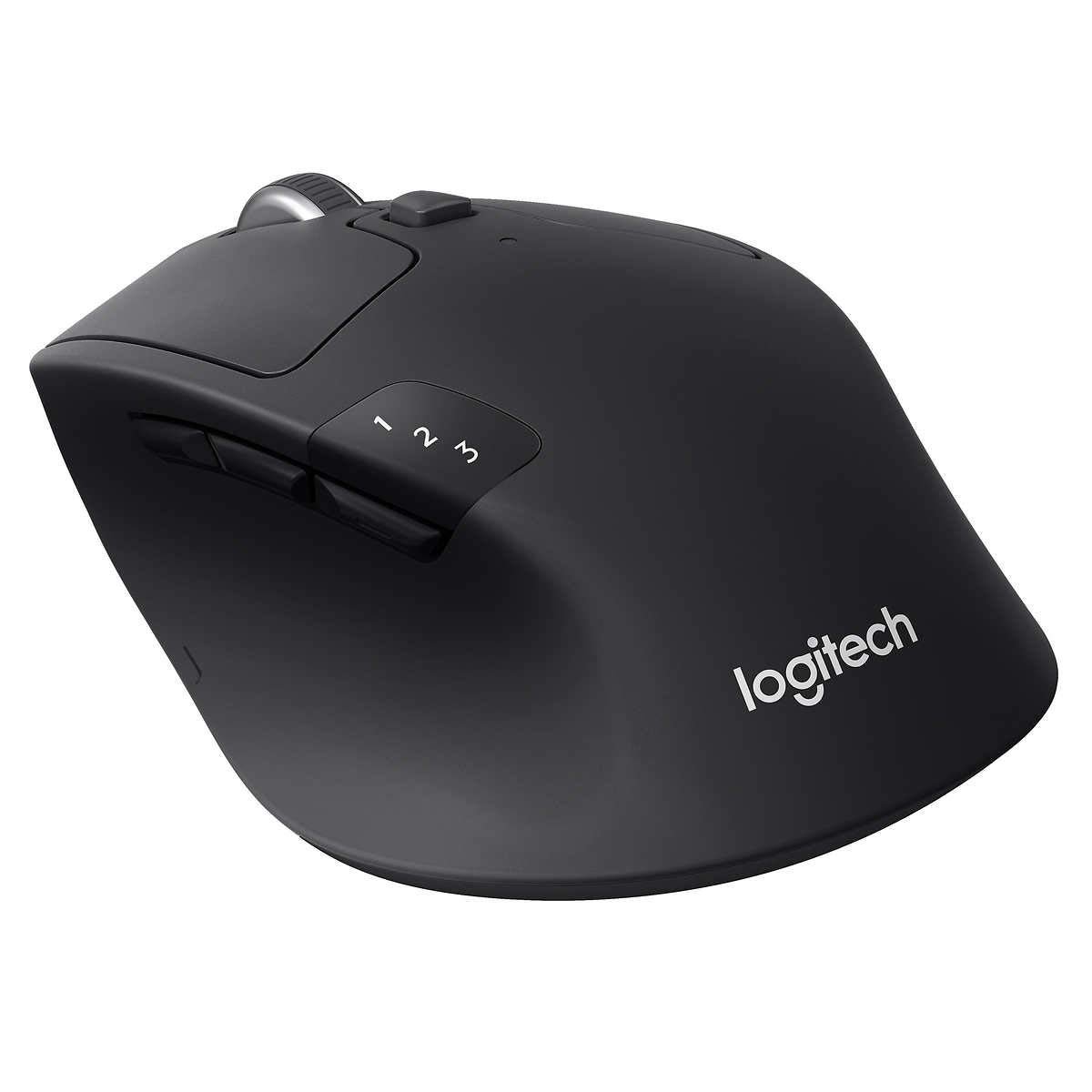
This is the mouse we’d recommend to most people with smaller hands who want something reliable rather than a specialty shape. Its compact, low-profile body sits comfortably under a smaller palm without forcing a stretch, and it still packs six customizable buttons and the ability to pair with up to three devices and switch between them instantly. Battery life runs up to two years on a single AA, so it’s not something you’ll think about often.
Good for: anyone who wants a normal-looking, comfortable mouse without a big learning curve. Watch out for: it’s not a specialty ergonomic shape, so it won’t help as much with existing wrist pain as a vertical mouse would.
2. Logitech Pebble Wireless Mouse — Best Ultra-Compact

At around 100mm long, this is genuinely one of the smallest full-featured mice you can buy, which makes it a strong pick if a standard-size mouse still feels too big in your hand. Despite the tiny footprint it keeps a capable sensor, seven programmable buttons, and both wireless and Bluetooth connectivity, plus it’s ambidextrous, so it works whichever hand you use.
Good for: smaller hands that find even “compact” mice too large, or anyone who wants something travel-friendly. Watch out for: the very small size can feel cramped for people with medium-to-large hands, so it’s specifically a small-hand pick.
3. Contour UniMouse Small — Best Vertical Design

If a flat mouse causes wrist or forearm pain, a vertical mouse keeps your hand in a more natural handshake position instead of twisting your forearm flat. The UniMouse stands out because its hinge angle adjusts anywhere from 35 to 70 degrees, so you can dial in exactly how vertical you want it, and the small size specifically fits smaller hands rather than being a scaled-down version of a large mouse. A five-way adjustable thumb rest adds extra support.
Good for: people dealing with existing wrist or forearm discomfort who want a genuinely ergonomic shape. Watch out for: vertical mice take a few days to get used to if you’ve never used one before.
4. Anker Vertical Ergonomic Mouse — Best Budget Pick

You don’t need to spend a lot to try a vertical, small-hand-friendly shape, and this is the mouse that proves it. It has a fixed 57-degree vertical angle that reduces forearm twisting, a compact body that suits smaller hands, and adjustable DPI for switching between precise and fast cursor movement. It won’t have the premium build or adjustability of the Contour, but it delivers the core ergonomic benefit at a fraction of the price.
Good for: anyone who wants to try a vertical ergonomic mouse without committing to a premium price. Watch out for: the angle is fixed, not adjustable, so it’s a one-size-fits-most solution rather than a custom fit.
How to Choose the Right Mouse for Small Hands
- Measure your hand, not just “small” vs “large”. Measure from the base of your palm to the tip of your middle finger. As a rough guide, a mouse length of about 115-122mm tends to suit smaller hands best, while anything over 125mm often leaves the palm resting on the back edge instead of properly cradled.
- Check grip width too. A narrower grip width, roughly under 60mm at the point where your thumb and ring finger rest, keeps your fingers from spreading too wide, which reduces strain at the base of the thumb.
- Know your grip style. Palm grip rests your whole hand on the mouse and usually wants a shorter, curved shape. Claw and fingertip grips work well with smaller, lighter mice since less of the hand touches the surface.
- Flat vs. vertical isn’t about hand size alone. Vertical mice help most with existing wrist or forearm discomfort, regardless of hand size. If you have no pain currently, a well-fitted flat mouse is often the easier adjustment.
FAQ
Are vertical mice actually better for small hands? Not automatically, size and shape matter more than orientation. A well-fitted flat mouse in the right size can be just as comfortable as a vertical one. Vertical designs specifically help if you have existing wrist or forearm strain from twisting your arm flat.
Do gaming mice work well for small hands too? Some do. Many gaming mice are designed lighter and more compact than office mice, so a few of them fit smaller hands well, but check the specific length and grip width rather than assuming based on the gaming label.
How long does it take to adjust to a vertical mouse? Most people report the hand and shoulder feeling more relaxed within the first week of regular use. Expect a short adjustment period where clicking accuracy feels slightly off before it becomes natural.
Final Verdict
The Logitech M720 Triathlon is the safest first buy for most smaller hands: comfortable, familiar, and reliable. If a standard-size mouse still feels too big, size down further with the Razer Pro Click Mini. If you’re dealing with existing wrist or forearm discomfort, the Contour UniMouse Small is worth the extra cost for its adjustable angle. And if you just want to test whether a vertical mouse helps before spending much, start with the Anker.