Disclosure: This post contains affiliate links. As an Amazon Associate, we earn from qualifying purchases at no extra cost to you.
If you spend more than four hours a day sitting, you’ve probably felt the numbness, lower back stiffness, and tailbone discomfort that comes with it. That’s not just an annoyance, it’s your body signaling that pressure is building up unevenly. A good seat cushion redistributes that weight, supports your spine’s natural alignment, and can be the difference between dreading your chair and barely noticing it. Here’s what actually helps.
Quick Picks
- Best Overall: Everlasting Comfort Seat Cushion
- Best for Tailbone Pain: ComfiLife Premium Coccyx Cushion
- Best Cooling Option: Medline EquaGel Cushion
- Best Budget Pick: Basic Memory Foam Coccyx Cushion
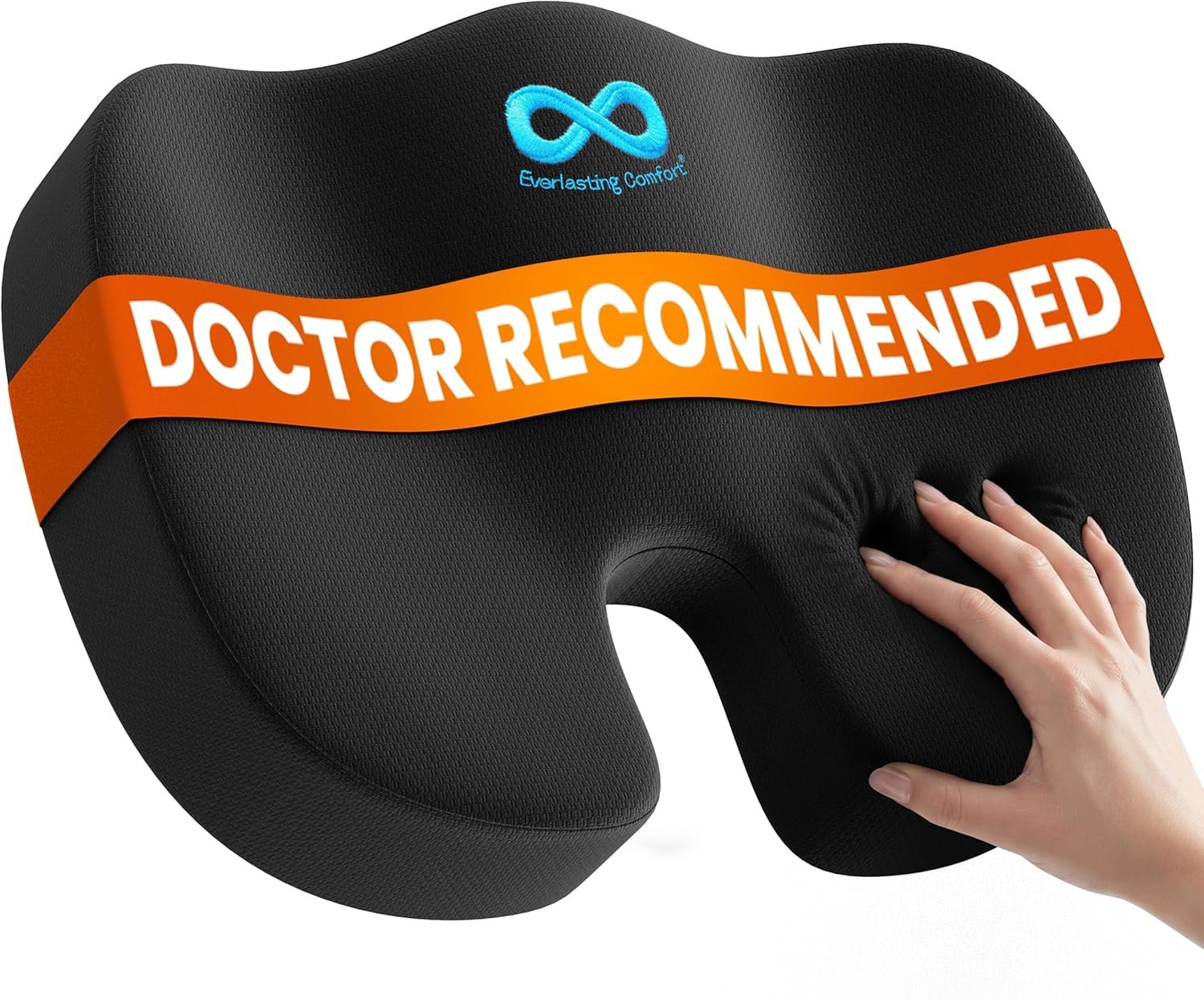
1. Everlasting Comfort Seat Cushion — Best Overall

With well over 100,000 reviews, this is the cushion most people land on first, and it earns that popularity. It’s made from 100% memory foam with a U-shaped coccyx cutout that keeps pressure off your tailbone, and a non-slip rubber base keeps it from sliding around as you move. At about 3.15 inches thick, it does raise your seated height slightly, which for most people actually helps posture by positioning the hips a bit above the knees.
Good for: anyone sitting 6-8 hours a day who wants a proven, well-reviewed all-rounder. Watch out for: the height increase can put you too close to your desk if your chair or desk is already at its limit, so check your setup first.
2. ComfiLife Premium Coccyx Cushion — Best for Tailbone Pain

If tailbone pain (coccydynia) is your specific issue, this cushion is built around solving exactly that. Its coccyx cutout is deeper and more pronounced than most budget cushions, keeping the tailbone from making contact with the seat at all. The 100% memory foam construction holds its shape noticeably longer than lower-density foam, an important detail since cheap foam cushions tend to flatten out within 6-12 months of daily use.
Good for: people with diagnosed or suspected tailbone pain who need real pressure relief in that specific spot. Watch out for: if your discomfort is more general lower-back or hip pain rather than tailbone-specific, a flatter, more evenly-distributed cushion may suit you better.
3. Medline EquaGel Cushion — Best Cooling Option

If the back of your thighs feel sweaty every time you stand up, a gel cushion solves that in a way foam simply can’t. The EquaGel design offers excellent pressure relief for larger body types especially, and the gel stays cool and resilient rather than trapping heat the way memory foam does over a long session. It’s a clinical-grade design, originally built for wheelchair and medical use, so it holds up extremely well over years of daily use.
Good for: anyone who runs hot while sitting, or larger body types who need more robust pressure distribution. Watch out for: gel cushions are noticeably heavier than foam and cost more.
4. ZZ-WELL Seat Cushion — Best Budget Pick

This is the sensible starting point if you’re not sure a cushion will even help, and you don’t want to spend much finding out. It has the same basic coccyx-cutout memory foam design as the pricier picks, a non-slip bottom that grips fabric, mesh, and hard seats, and a removable, washable cover. It won’t hold its shape quite as long as premium foam under heavy daily use, but it’s an easy, low-risk way to test whether cushioning solves your discomfort before spending more.
Good for: first-time buyers or anyone sitting under 6 hours a day who wants basic relief. Watch out for: if you sit 6+ hours daily, it will likely flatten out faster than a premium cushion and need replacing sooner.
How to Choose the Right Seat Cushion
- Identify where your discomfort actually is. Tailbone pain (coccydynia) is localized right at the base of the spine and needs a deep coccyx cutout. Sciatica radiates from the lower back through the glute and leg, and often responds better to a larger cutout or a flat, evenly-distributed cushion instead.
- Check stability features. A cushion that slides around while you sit defeats the purpose. Look for a non-slip rubber base or straps that anchor it to your chair, especially on mesh or leather seats.
- Account for the height it adds. Most cushions raise your seated height by roughly 3-4cm. Check that this doesn’t push your arms too high relative to your desk or your eyes too high relative to your monitor, adjust your desk or monitor height afterward if needed.
- Match the material to your priorities. Memory foam is the most common and generally comfortable. Gel adds cooling and extra pressure relief but costs more and weighs more. A washable cover matters more than people expect for long-term hygiene.
FAQ
Will a seat cushion actually fix my back pain? It can help significantly by improving posture and redistributing pressure, but a cushion is a complementary accessory, not a replacement for an ergonomic chair, correct desk height, and good posture habits overall. If pain persists after a few weeks, it’s worth checking your full desk setup or seeing a professional.
How long do memory foam seat cushions last? Premium, high-density memory foam typically holds its shape for 1-2+ years of daily 6-10 hour use. Budget, lower-density foam often starts flattening within 6-12 months under the same use.
Can I use a seat cushion in a car or on other chairs too? Yes, most cushions in this category are designed to be portable and work on office chairs, dining chairs, car seats, and even wheelchairs, which makes them useful beyond just the desk.
Final Verdict
The Everlasting Comfort cushion is the safest first buy for most people, it’s proven, comfortable, and handles general 6-8 hour sitting well. If your pain is specifically tailbone-related, upgrade to the ComfiLife for a deeper, more targeted cutout. If heat buildup is your main complaint, the Medline EquaGel is worth the extra cost and weight. And if you’re just testing whether a cushion helps at all, start with the basic memory foam pick before spending more.